Created By-Browne Hewitt
Experiencing with vision issues can be extremely hard, impacting both everyday tasks and overall quality of life. For years, I faced challenges with nearsightedness, relying on glasses and contact lenses that often seemed more as if they were a burden than a solution. This was until I found out about SMILE eye surgery, a innovative procedure that completely transformed my relationship with vision. As SMILE Procedure Omaha Ne explored what SMILE eye surgery entails, I found myself fascinated by its cutting-edge approach and exciting benefits.
Grasping how SMILE laser eye surgery works and what it could offer was the beginning towards my choice. The prospect of a quick recovery and minimal side effects in the beginning drew me in, but it was the potential to enjoy life without conventional corrective lenses that finally convinced me to go for it. In this article, I will reveal my personal journey with SMILE eye surgery, describing its benefits, the costs involved, and what to expect during recovery, as well as comparing it with other options like PRK. Come along with me as I tell how this remarkable procedure transformed my life and awakened me to a world of clarity I had long been lacking.
Comprehending SMILE Eye Surgery
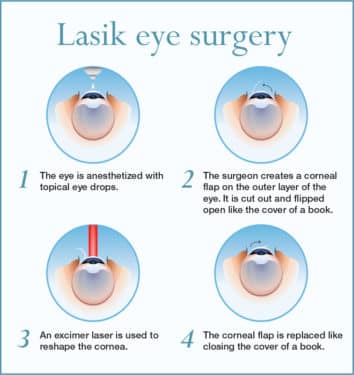
The SMILE Procedure, or Small Incision Lenticule Extraction, is a innovative treatment designed to address myopia, known as myopia. Unlike standard laser-assisted in situ keratomileusis, which entails forming a flap in the outer layer of the eye, SMILE enhances precision by utilizing a laser to extract a tiny piece of cornea material through a minimal cut, leading to less risks and a faster recovery. This non-invasive method ensures considerable advancements in vision with lower chance of post-operative complications.
The key to comprehending how SMILE Eye Surgery operates lies in its advanced laser methods. The treatment starts with a exact laser that creates a disc-shaped tissue, a disc section of tissue, within the cornea. This tissue is then meticulously removed through a small cut, enabling the cornea to reform and adjust the refractive error related to nearsightedness. https://mgyb.co/s/oodWI is rapid, normally lasting approximately 30 minutes, and its accuracy results in a quicker recovery, enabling patients to return to normal activities very soon after.
One of the most desirable benefits of SMILE Eye Surgery is its array of positives. Patients can look forward to substantial sight increase, a minimized risk of dry eye syndrome, and less after surgery discomfort compared to other medical options like PRK or LASIK. Additionally, the less invasive quality of the procedure ensures that there is none flap to treat, further minimizing complications. Overall, SMILE delivers a modern answer for those looking for liberation from glasses or contact lenses, permitting them to enjoy a life with crystal-clear vision.
Benefits and Healing
Small Incision Lenticule Extraction eye surgery offers numerous advantages that make it an intriguing option for those in need of vision correction. One of the key benefits is its less invasive nature. Unlike traditional LASIK procedures, SMILE does not require the making of a large corneal flap, which reduces the chance of complications and promotes faster healing. Patients often experience less discomfort and quicker visual recovery, permitting them to return to their daily activities earlier.
The recovery process after SMILE surgery is typically easy. Many patients notice an improvement in their vision within a day or two, and full stabilization often occurs within a number of weeks. This quick recovery period is a significant factor for people who are eager to avoid extended downtime. Following the procedure, patients are advised to follow their doctor's after-surgery care instructions, which may include using prescribed eye drops and avoiding intense activities for a brief period.
Furthermore, SMILE surgery is particularly effective for treating nearsightedness, making it a strong option for those with myopia. The accurate nature of the procedure means that many patients achieve 20/25 vision, enhancing their quality of life without the reliance on glasses or contact lenses. The benefits of SMILE eye surgery extend beyond just correcting vision—patients often report a increased sense of freedom and confidence in their daily lives after the procedure. spintax
Expense Considerations
When thinking about SMILE eye surgery, grasping the expenses associated is essential. The mean price of SMILE laser eye surgery can vary considerably based on several factors, like geographical location, the experience of the surgeon, and the specific technology used. On the whole, patients might foresee to spend between 2k to $4,000 dollars per eye. This preliminary investment can be seen as a permanent solution to visual impairment, particularly when taking into account the ongoing costs of glasses or contact lenses over a lifetime.
Insurance for SMILE surgery is another crucial aspect to consider. Many health plans view this procedure as elective, implying they may not cover it at all. However, some plans may offer partial coverage or financing options. It is sensible to check with your insurance provider to understand what is covered and look into any available financing plans that can help spread the cost over time.
Beyond the upfront payment, potential additional costs should also be on your radar. These can include pre-operations evaluations, post-operative follow-up visits, and any necessary enhancements that might be needed later. It’s crucial to ask the clinic for a detailed breakdown of all costs associated with the SMILE procedure to prevent any unexpected expenses. Comprehending these elements helps in making an informed decision about whether SMILE eye surgery is the right choice for you.
Comparison to Alternative Procedures
When evaluating laser eye operations, it's crucial to understand how SMILE contrasts from other popular procedures such as LASIK and PRK. Although LASIK requires developing a flap in the cornea to modify it, the SMILE procedure is generally advanced, since it works without forming a flap. This not just reduces the threats connected to layer complications but additionally promotes a more robust corneal structure post-surgery. In comparison, PRK eliminates the outer layer of the cornea, which can lead to a longer recovery time in contrast to SMILE.
Another primary difference is recovery time. Patients generally experience a more rapid recovery with SMILE compared to both LASIK and PRK. Many individuals return to their everyday activities within a day or two after SMILE surgery, but PRK can take a week or more for vision to stabilize. This rapid recovery is one of the perks that makes SMILE laser eye surgery appealing, particularly for those with busy lifestyles.
Finally, when it comes to costs, SMILE laser eye surgery typically falls in a comparable price range as LASIK, although it may be higher than PRK. The exact cost can vary based on elements such as the clinic and geographical location. When discussing SMILE surgery cost, it's crucial to account for the overall benefits and the potential for long-term vision improvement, that can turn it into a valuable investment for those seeking liberation from glasses or contact lenses.